
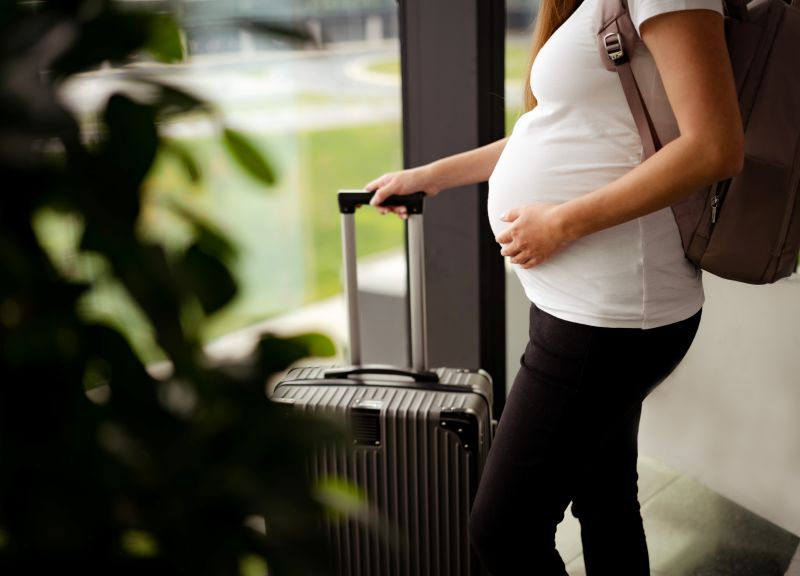
Whether planning a restful “babymoon,” heading out for a holiday gathering, or managing essential business travel, leaving town while pregnant can bring excitement alongside a fresh list of questions.
Is it safe to fly? How do long road trips affect circulation? What destinations require caution?
At Little Silver Pediatrics & Family Medicine, we care for local Monmouth County families through every stage. So as we head into the holiday season, here are some guidelines for traveling safely and comfortably during pregnancy.
Timing Your Trip: The “Sweet Spot”
According to the American College of Obstetricians & Gynecologists, for most expectant mothers with uncomplicated, low-risk pregnancies, the safest and most comfortable window for travel is the second trimester (weeks 14 to 28).
- Weeks 1–13 (First Trimester): While travel is generally medically permissible, early symptoms like morning sickness, extreme fatigue, and frequent nausea often make long journeys uncomfortable.
- Weeks 14–28 (Second Trimester): Energy levels are typically at their peak, nausea has usually settled, and mobility remains manageable.
- Weeks 28–36+ (Third Trimester): Physical discomfort increases, and the likelihood of pre-term labor rises. After 36 weeks—or 32 weeks for multiples—staying close to home and your delivery hospital is generally recommended.
Air Travel in 2026: Modern Tips & Rules
Air travel is considered safe for uncomplicated pregnancies because modern commercial airplane cabins maintain pressurized environments. Keep these 2026 airline policies and comfort protocols in mind:
- Know the Cutoffs: Most domestic airlines permit flying until 36 weeks of pregnancy, though international carriers often cut off travel earlier (typically around weeks 28–34) or require a formal “fit-to-fly” letter from your healthcare provider.
- Book an Aisle Seat: An aisle seat gives you immediate access to walk the cabin and reach the lavatory without having to climb over others.
- Mitigate Blood Clot (DVT) Risks: Pregnancy naturally increases the risk of deep vein thrombosis (DVT). During flights longer than two hours:
-
- Wear graduated compression socks to reduce leg swelling and improve venous return.
- Stand up and stroll the aisle every 60–90 minutes.
- Perform in-seat foot pumps and ankle rolls.
- Buckle Up Correctly: Keep your seatbelt fastened throughout the entire flight. Position the lap belt low and flat beneath your bump, snugly across your pelvic bones rather than across your stomach.
Road Trips & Train Travel
If you are staying closer to home—perhaps driving along the coast or visiting nearby relatives for the holidays — use these road safety rules:
- Two-Hour Rest Stops: On driving trips, avoid sitting for longer than 2 hours at a time. Plan scheduled rest stops to stretch, use the restroom, and rehydrate.
- Seatbelt & Airbag Safety: Never skip your shoulder strap or place it behind your back. Seatbelts should run between your breasts and down below your belly. Slide your passenger seat back as far as comfortable from the dashboard airbag assembly.
- Train Travel: Trains offer more room to move than buses or planes. When walking to the dining or restroom cars, hold securely onto seat handles to guard against sudden track shifts.
Destination Awareness: 2026 Health Considerations
Before booking international travel, cruise vacations, or tropical destinations, check current travel health notices or advisories:
- Avoid areas with current outbreaks that pose health risks. The CDC uses travel health notices (THNs) to inform travelers about health risks and provides advice about protective actions travelers can take to prevent infection or adverse health effects. Check current travel health notices
- Altitude Adjustments: Avoid destinations at elevations above 8,000–9,000 feet unless your body is already acclimated, as thinner air decreases maternal blood oxygen levels.
- Cruise Ships & Gastrointestinal Health: Cruise ships carry a higher risk of norovirus outbreaks. Furthermore, most major cruise lines restrict travel for women entering their 24th week of pregnancy due to limited emergency neonatal equipment at sea.
- Food & Water Safety: Drink only bottled or filtered water in areas with uncertain municipal water supplies, and avoid unpasteurized dairy, soft cheeses made with raw milk, raw seafood, and undercooked meats.
When to Seek Urgent Medical Care
Whether at home or away, always pay attention to what your body is telling you. Seek immediate medical attention at the nearest emergency facility if you experience:
- Vaginal bleeding or unusual fluid leakage
- Severe abdominal pain, persistent cramping, or regular pelvic contractions
- Sudden, severe swelling in your hands, face, or ankles accompanied by a headache or vision changes
- Calf pain, localized leg swelling, or warmth to the touch (possible signs of DVT)
Partnering with Little Silver Pediatrics & Family Medicine
Planning holiday gatherings, family vacations, and work travel should be a memorable experience. As a pediatric and family medicine practice, our team supports maternal health, infant care, and family wellness under one roof.
If you have any questions before you finalize your travel, reach out to review your plans and ensure you and baby have everything needed for a smooth, relaxing trip.